Nutrition · Supplements
Nutratology Ashwagandha: A Closer Look at This Popular Herb
Approximately 3 min read Pure Vita Wellness
Busy mornings, full calendars, and evenings that disappear before you’ve had a moment to yourself—sometimes, making space for your well-being takes a little planning.
Ashwagandha has become a popular topic in conversations about stress and sleep. But what is this herb, and what should you know before choosing a supplement?
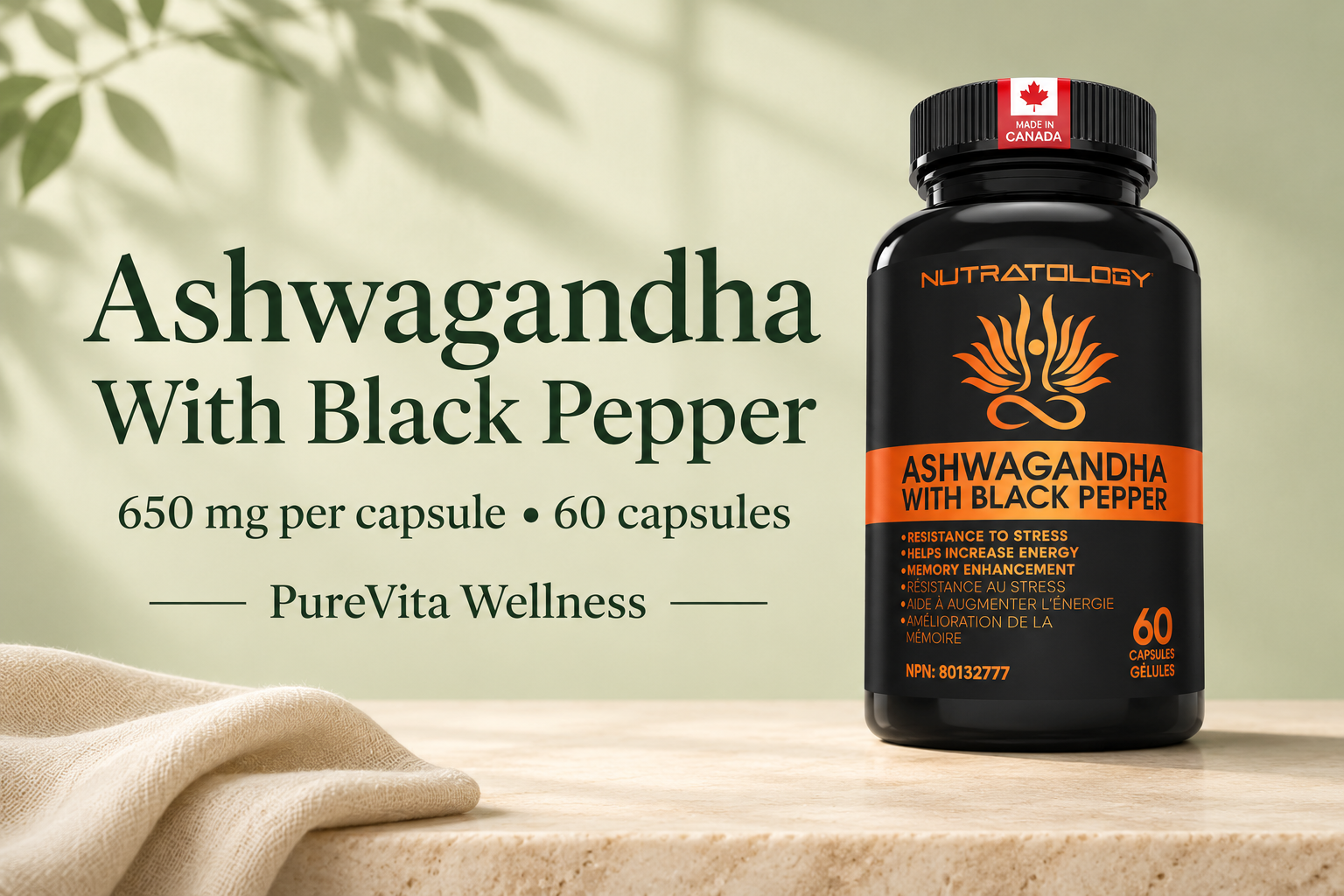
Nutratology Organic Ashwagandha with Black Pepper offers a capsule format for people interested in exploring it. Here’s a closer look at the formula and the research behind the ingredient.
What is ashwagandha?
Ashwagandha, also known as Withania somnifera, is an herb used in traditional Ayurvedic medicine. It is often described as an “adaptogen,” a term associated with helping the body respond to stress.
Some studies suggest that certain ashwagandha preparations may help with stress and sleep. However, many studies are small and use different formulations, making it difficult to apply their findings equally to every product.
That distinction matters: promising research on an ingredient does not guarantee the same results from every supplement containing it.
What’s inside Nutratology’s formula?
The manufacturer’s page for the 60-capsule product lists:
- Ashwagandha — 650 mg per capsule
- Black pepper — 2.5 mg per capsule
Nutratology also describes the product as non-GMO, third-party tested, and made in Canada in a GMP-certified facility.
The Amazon listing shown describes vegan capsules and highlights black pepper for enhanced absorption. That marketing description alone does not establish how much it changes absorption or results for this particular formula.
Always compare the complete ingredient panel and directions on the bottle you receive.
What does the research say?
Research on ashwagandha extracts suggests potential benefits for stress and sleep over several weeks. In some studies, participants reported less stress after six to eight weeks. Sleep improvements were generally modest.
The amount on a supplement label tells only part of the story. Different preparations can contain different concentrations of active compounds, so 650 mg of one formula is not necessarily equivalent to 650 mg of another. Study doses should not be used to set your own dose.
Rather than expecting an immediate transformation, approach the product with realistic expectations and follow its current label.
Make room for everyday care
Exploring a supplement can also be a good opportunity to review your routine. Are you leaving time to unwind? Are you regularly putting your own needs at the bottom of the list?
Choose one manageable action: take a quiet break, plan a more consistent bedtime, or make room for an activity you enjoy. A supplement should complement your approach to well-being, rather than become the whole plan.
What to know before taking it
Ashwagandha can cause drowsiness or digestive upset, and rare cases of liver injury have been reported. Long-term safety remains uncertain. Avoid it during pregnancy and breastfeeding, and consult a healthcare professional if you take medication or have thyroid, autoimmune, or liver concerns.
An informed choice starts with the full label, your health history, and clear expectations.
This button opens the product's listing on Amazon.ca in a new tab.